before the main story
Christmas Apocalypse Plan
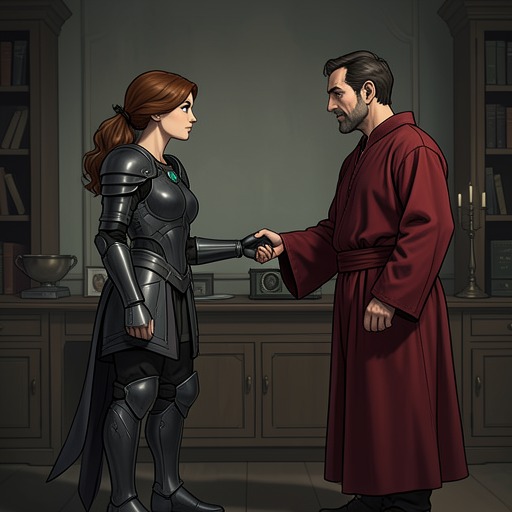
[Lucy Morningstar](entity:character-recall-character-lucy-morningstar-672cea682fee) and [Metatron](entity:character-recall-character-metatron-a13d1deefe46) secretly decide that the apocalypse will begin on [Christmas Day](entity:time-recall-time-christmas-day-08a71908c479). They debate methods of destroying the world, eventually choosing a scheme involving the unraveling of reality itself. Their conspiracy establishes the hidden conflict that will later surround [Bael-Sharoth](entity:character-recall-character-bael-sharoth-184ca9eabdbd) and his family.
months before the main story
The Cult Summons Bael
[Mike's cult](entity:organization-recall-organization-mike-s-cult-167def7bb5e8) summons [Bael-Sharoth](entity:character-recall-character-bael-sharoth-184ca9eabdbd) to an altar, intending to exchange [Six](entity:character-recall-character-six-7b768c03430a) for wealth. Because the summoning circle uses sugar instead of blessed salt, Bael escapes its containment and turns the cultists into golden statues, leaving the child alive. The event unexpectedly places Six under his protection.
early in the story
The Haunted House Purchase
Realtor Gail shows [Bael-Sharoth](entity:character-recall-character-bael-sharoth-184ca9eabdbd) and Margaret the haunted House on Black Street. The couple, presenting themselves as Bill and Margaret Sharoth, buy it with cash despite its violent history, while [Six](entity:character-recall-character-six-7b768c03430a) remains with them. The purchase gives the disguised demons a temporary human household and begins their attempt to shelter Six on [Earth](entity:location-recall-location-earth-a6b883af9147).
shortly afterward
The Tomato Sauce Summoning
[Six](entity:character-recall-character-six-7b768c03430a) summons [Bael-Sharoth](entity:character-recall-character-bael-sharoth-184ca9eabdbd) again, this time to open a stubborn jar of marinara sauce. She offers him a copy of The Princess Bride, and the absurd bargain becomes the beginning of a genuine friendship. Bael starts spending his evenings with Six, discovering ordinary human pleasures that his infernal life had denied him.
early in the story
Bael’s Infernal Bureaucracy
Bael returns to his work as a baron of [Hell](entity:location-recall-location-hell-e163fca35b4f), where he manages paperwork rather than personally tormenting souls. His growing disillusionment with [Hellish Bureaucracy](entity:concept-recall-concept-hellish-bureaucracy-76af9f8f5172) is contrasted with his renewed interest in books, food, and companionship. His practical reforms, especially the use of [Minor Torments](entity:concept-recall-concept-minor-torments-594935ad8423), show that he remains a clever administrator despite his emotional exhaustion.
after Bael begins helping Six
Maharet Investigates Bael
[Maharet Flameheart](entity:character-recall-character-maharet-flameheart-ca16b27724d3) notices Bael's unexplained attachment to a human girl and confronts him. She suspects that he is violating infernal expectations and may be hiding a larger scheme. Her investigation brings the two old rivals back into direct conflict and makes [Six](entity:character-recall-character-six-7b768c03430a)'s safety a matter of infernal politics.
soon afterward
The Traveler’s Accident
Maharet follows Bael through [Six](entity:character-recall-character-six-7b768c03430a)'s summoning and insults the child, provoking Six to manipulate the portal. Instead of merely looping Maharet back to [Hell](entity:location-recall-location-hell-e163fca35b4f), the magic throws both demons through multiple alien dimensions before returning them to [Earth](entity:location-recall-location-earth-a6b883af9147). The accident leaves them trapped together and creates the [Traveler’s Bond](entity:state-recall-state-traveler-s-bond-cce840fbed63).
after the Traveler’s Bond forms
Maharet’s Adoption Wager
Maharet proposes that Bael find [Six](entity:character-recall-character-six-7b768c03430a) a suitable human family by [New Year](entity:time-recall-time-new-year-3081c4d3858f) or surrender his rank and remain exiled on [Earth](entity:location-recall-location-earth-a6b883af9147). Bael accepts, but requires Maharet to protect Six from all harm if she remains involved. When Maharet tries to return to [Hell](entity:location-recall-location-hell-e163fca35b4f), Bael uses the rules of summoning to prove that she must remain with him until the task is complete.
during the wager’s beginning
Six’s Foster History
Bael explains that [Six](entity:character-recall-character-six-7b768c03430a) was born Marleene Quinzel, survived the death of her family in Six family's car accident, and spent years moving through foster care. [Mike](entity:character-recall-character-mike-cb6fa8ab1468) later renamed her Six so that she could be offered as a sacrificial victim. Her history clarifies why Bael sees
immediately after Maharet stays
Six Rejects the Arrangement
When [Six](entity:character-recall-character-six-7b768c03430a) learns that Maharet will remain on [Earth](entity:location-recall-location-earth-a6b883af9147), she lashes out at Bael and tries unsuccessfully to banish him. Her grief reveals that she had viewed Bael as a magical helper she could summon and dismiss, not as a permanent guardian. Maharet helps Bael understand that Six fears losing control and reliving the abandonment that has shaped her life.
early in the Earth exile
The False Wedding Proposal
Bael and Maharet adopt a married human identity to simplify their dealings with the world. Maharet forces Bael to propose properly in the rain and demands a diamond ring. Bael creates an extraordinary magical wedding ring, and the joke begins to acquire genuine emotional weight.
shortly afterward
The Family Vehicle Murphy
Bael negotiates aggressively with a car salesman and acquires a black SUV. He animates it with an animus spell and names it [Murphy](entity:character-recall-character-murphy-2bf27d1ce3fb), invoking [Murphy's Law](entity:rule-recall-rule-murphy-s-law-e46cdd83ced7) as a guiding principle. Murphy becomes an independent and mischievous member of the household, allowing the family to travel while deepening their increasingly domestic life.
during the first weeks on Earth
Bael’s First Human Outings
Bael and [Six](entity:character-recall-character-six-7b768c03430a) shop for groceries, watch television, eat ice cream, and go to the mall and bookstore. Bael struggles with human technology and social customs but learns quickly, while Six begins treating him as a reliable companion. Their shared routines transform their connection from accidental obligation into the beginnings of a family bond.
after the first month together
Bael’s Nightmare
Bael dreams of a ruined mansion, a shattered roof, a bloodied halberd, and [Six](entity:character-recall-character-six-7b768c03430a) trapped behind an unbreakable door. He wakes convinced the dream is a premonition of danger. The vision introduces the possibility that unseen forces are arranging events around Six and that his attempt to protect her may lead toward a future catastrophe.
immediately after Bael’s nightmare
The Bond Revealed
Bael discovers that he can feel Maharet's emotions through the [Traveler’s Bond](entity:state-recall-state-traveler-s-bond-cce840fbed63). They realize that continued shared travel has fused parts of their identities and may eventually allow them to hear each other's thoughts. The unwanted intimacy complicates their rivalry and begins turning their partnership into a romantic relationship.
after the nightmare
The Adoption Agency Visit
Bael and Maharet visited the Angel Wings adoption agency and met Angel West Wind. West Wind offered to help place [Six](entity:character-recall-character-six-7b768c03430a). Bael revealed part of the truth about their situation to him, and West Wind began to suspect these demonic guardians. This meeting established a seemingly viable legal adoption path, while also
soon after the agency visit
Six’s Death Record
[Zephyr](entity:character-recall-character-zephyr-e5bb0575db54) reveals that [Six](entity:character-recall-character-six-7b768c03430a) is officially recorded as having drowned two years earlier. Maharet deduces that [Mike](entity:character-recall-character-mike-cb6fa8ab1468) used a corrupt contact to falsify her death and keep her available for sacrifice. Zephyr attempts to exploit the problem by encouraging Maharet to abandon Bael, but she rejects him and threatens to boil him alive.
during the adoption process
The Family Movie Night
Maharet and Bael deliberately spend time with [Six](entity:character-recall-character-six-7b768c03430a) by taking her to a movie. Six and Bael bond over The Lion King, joking about its famous scenes and adopting [Hamna shida](entity:expression-recall-expression-hamna-shida-5c364c905e1c) as a family philosophy. Their shared laughter marks a decisive improvement in their relationship and restores some of the trust lost after Maharet's arrival.
shortly afterward
The First Family Intimacy
Bael and Maharet's playful argument over clothing and dresses turns into physical intimacy. The [Traveler’s Bond](entity:state-recall-state-traveler-s-bond-cce840fbed63) intensifies as they recognize that their attraction is no longer merely strategic or accidental. Their relationship becomes openly romantic, complicating the adoption wager and making their future separation increasingly painful.
after their first intimate encounter
The Adoption Papers
[Zephyr](entity:character-recall-character-zephyr-e5bb0575db54) completes paperwork making [Six](entity:character-recall-character-six-7b768c03430a) the foster daughter of Bill and Margaret Sharoth and listing her as eligible for adoption. Bael threatens Zephyr with [Bael’s Black Book](entity:object-recall-object-bael-s-black-book-4d62a86c277b) if he interferes again. Bael also enchants a teddy bear backpack named [Yaldaboath](entity:object-recall-object-yaldaboath-030c3872f27b) to protect Six, revealing how seriously he now takes his parental responsibilities.
late summer
Moving Into the Murder House
The household moves from the first rented property into The House on Black Street, accepting its ghosts and murderous atmosphere as a kind of home. Bael transports their belongings through a summoning circle, while Maharet and [Six](entity:character-recall-character-six-7b768c03430a) settle into the old building. The demons' chosen household becomes stable enough to attract neighbors and begin resembling a real family.
soon after the move
The Neighbor Welcome
[Jim Stein](entity:character-recall-character-jim-stein-d5c3971bb952) and [Julia Stein](entity:character-recall-character-julia-stein-d0628d6174c4) bring wine to welcome the new residents. Bael and Maharet successfully pass as a wealthy married couple while sharing extraordinary wine and beer. The visit integrates the family into the neighborhood and provides Bael and Maharet with human models for domestic life.
late summer
The Bookshop Encounter
[Six](entity:character-recall-character-six-7b768c03430a) wanders into [Granny’s Books](entity:location-recall-location-granny-s-books-505c704cfd5e) and meets [Granny](entity:character-recall-character-granny-39cc4c22c92a), a werewolf who burns only books he considers worthless. She is warned away from the back stacks but enters anyway, where the sentient books trap her in a pocket dimension. The encounter introduces Six to a supernatural community outside her household and tests her ability to solve magical problems independently.
during Six’s bookshop adventure
The Paperman Attack
A desperate paper creature attacks [Six](entity:character-recall-character-six-7b768c03430a) because the forgotten books want someone to read them. Six summons Bael and Maharet rather than trying to flee, and the two demons intimidate the Paperman before [Titan](entity:character-recall-character-titan-5e19d1b2cd46) destroys it. The incident teaches Six that her curiosity can lead her into danger while confirming that her guardians will respond when she calls.
immediately afterward
Six Escapes the Book Maze
[Six and Titan](entity:relation-recall-relation-six-and-titan-7fa7a0c87bc1) remain trapped in the shifting book maze after Bael and Maharet leave. [Six](entity:character-recall-character-six-7b768c03430a) realizes that the books want attention and lures a divination book into helping her find the exit. The paper lady then asks Six to return and spend time with the forgotten books, turning a hostile encounter into an uneasy friendship.
after Six returns home
Titan’s Protection Oath
Maharet confronts [Six](entity:character-recall-character-six-7b768c03430a) about wandering into danger and explains that [Titan](entity:character-recall-character-titan-5e19d1b2cd46) would sacrifice himself to protect her. When Bael tries to release Titan from that obligation, the hellhound refuses, declaring that his word belongs to him. His oath becomes a conscious choice to remain with Six rather than merely a duty assigned by [Hell](entity:location-recall-location-hell-e163fca35b4f).
after the bookshop incident
Six’s Bedroom Expansion
Bael attempts to enlarge [Six](entity:character-recall-character-six-7b768c03430a)’s bedroom by tripling its dimensions, misunderstanding the resulting increase in volume. The spell tears open reality and sucks Six into [The Void Between Worlds](entity:location-recall-location-the-void-between-wor-a447516f9053). [Lou](entity:character-recall-character-lou-34df28db54a6) repairs the damage and returns her safely, but warns that Bael is far more powerful and significant than he appears.
immediately after the spatial accident
Lou’s Warning
[Lou](entity:character-recall-character-lou-34df28db54a6) restores [Six](entity:character-recall-character-six-7b768c03430a)'s bedroom and tells her that [Bael-Sharoth](entity:character-recall-character-bael-sharoth-184ca9eabdbd) is no ordinary mid-level bureaucrat. Six begins questioning whether Bael is genuinely protecting her or using her as part of a larger plan. Bael, meanwhile, realizes that Six has survived several impossible encounters with death, suggesting that a greater power may be shaping her fate.
after Lou’s warning
Bael Confesses His Loneliness
At a furniture store, Bael admits that he has no true friends and that [Six](entity:character-recall-character-six-7b768c03430a) became the closest thing he had to one. He explains that his rise through [Hell](entity:location-recall-location-hell-e163fca35b4f)'s hierarchy began as a response to helplessness after the war. Six asks him to try to become the father she needs, and Bael accepts the challenge.
shortly afterward
Bael Tests Six’s Morality
Bael freezes time and tempts [Six](entity:character-recall-character-six-7b768c03430a) with immense magical power, including the ability to resurrect her dead family at someone else's expense. Six rejects the bargain, deciding that her family would not want their return to cause another person's suffering. Bael concludes that she is morally mature enough to begin learning magic later.
after the morality test
The Human-Facing Glamour
To conceal [Six](entity:character-recall-character-six-7b768c03430a)'s unusual nature from visiting demons, Bael casts a [Seeming glamour](entity:state-recall-state-seeming-glamour-ca3e533146e4) that gives her Maharet's red hair. Six is unsettled by the resemblance to her mother but ultimately chooses to keep the appearance. The illusion lets the three of them look like a coherent human family and deepens the mother-daughter bond between Maharet and Six.
late summer
Cherry Appears
[Cherry](entity:character-recall-character-cherry-117e1f44f384), a succubus working as a coffee-shop barista, recognizes Maharet and attempts to enthrall her with a desire spell. Because Maharet is bound to Bael through the [Traveler’s Bond](entity:state-recall-state-traveler-s-bond-cce840fbed63), the spell affects him as well and sends [Murphy](entity:character-recall-character-murphy-2bf27d1ce3fb) into a dangerous high-speed drive. Cherry’s arrival threatens to expose the family's presence on [Earth](entity:location-recall-location-earth-a6b883af9147).
immediately after Cherry’s spell
Murphy’s Resurrection
[Murphy](entity:character-recall-character-murphy-2bf27d1ce3fb) crashes to a stop outside the house, apparently destroyed. Bael discovers a fading spark and a fragile soul-web inside the SUV, then reinforces it with magical energy while [Six](entity:character-recall-character-six-7b768c03430a) and Maharet encourage the vehicle to survive. Murphy reignites through rage and compression, defeating the Grim Repo and becoming even more fully sentient.
shortly after Murphy’s resurrection
Titan Spares Cherry
[Titan](entity:character-recall-character-titan-5e19d1b2cd46) finds [Cherry](entity:character-recall-character-cherry-117e1f44f384) watching the house and forces her to drive him toward the redwoods. Rather than return her to [Hell](entity:location-recall-location-hell-e163fca35b4f), he offers her freedom in exchange for secrecy and recognizes that her lack of sexual desire may free her from the usual limitations of [Succubi](entity:creature-recall-creature-succubi-65e0b64acc3f). He secretly suspects that Cherry may be Bael's daughter but keeps the possibility to himself.
after Cherry’s departure
The Apocalypse Prophecy Emerges
Bael and Maharet visit [Harrows](entity:location-recall-location-harrows-56628b413f54) in [London](entity:location-recall-location-london-420923d4a60a), where the staff hail Bael as the architect of the apocalypse. The restaurant's prophecy claims that his return will end the age of humanity and unleash [Hell](entity:location-recall-location-hell-e163fca35b4f). Bael is shocked because he has no intention of starting Armageddon, while Maharet realizes that someone has built a public narrative around his name.
the next day
The School Enrollment Bargain
Bael enrolls [Six](entity:character-recall-character-six-7b768c03430a) at [Saint Drogo’s School](entity:location-recall-location-saint-drogo-s-school-1892263fb19a) by threatening to withdraw a major grant if the school rejects her. He discovers that the administrator is misusing donations and uses the situation to secure Six's admission. The maneuver begins Bael's effort to improve the institution as well as his daughter's education.
before the school year begins
Bael Reforms Saint Drogo’s
Bael learns that [Six](entity:character-recall-character-six-7b768c03430a) has missed two years of formal schooling and begins arranging tutors and advanced books. When the school tries to deny her admission, he exposes its financial corruption and takes a seat on the board. He removes dishonest members, protects vulnerable staff, and starts rebuilding [Saint Drogo’s School](entity:location-recall-location-saint-drogo-s-school-1892263fb19a) rather than merely buying a place for Six.
during Bael’s school reforms
The Sibling Bishop Revelation
Bael meets Bishop Alfonso and recognizes him as his brother [Ganon-Sharoth](entity:character-recall-character-ganon-sharoth-b66fb66e5dce), who has been possessing the bishop's body while rejecting [Hell](entity:location-recall-location-hell-e163fca35b4f). Ganon admits that he altered the summoning book to free a former cult follower and draw Bael's attention. The revelation explains why Bael's name appeared in one grimoire but not another and reconnects him with a long-lost brother.
shortly afterward
Ganon Agrees to the Wedding
Bael blackmails Ganon with the possibility that [Cherry](entity:character-recall-character-cherry-117e1f44f384) may be his daughter and demands help repairing the school. He also requires Ganon to attend his wedding. Ganon accepts, giving Bael an ally outside [Hell](entity:location-recall-location-hell-e163fca35b4f) and creating the possibility that Cherry's parentage will finally be clarified.
after the school crisis
Bael Chooses to Stay
Bael decides to remain on [Earth](entity:location-recall-location-earth-a6b883af9147) for ten years rather than abandon [Six](entity:character-recall-character-six-7b768c03430a). He uses accumulated infernal leave to make the decision official, even though he fears he is not suited to parenthood. Maharet agrees to stay and help, and the pair openly acknowledge their love despite the dangers surrounding them.
during their future planning
Maharet Reveals Her Fall
Maharet finally tells Bael that she is a fallen angel rather than a fire demon. Bael reveals that he had already inferred the truth from her wings, scars, and history in [Heaven](entity:location-recall-location-heaven-0167f964ad61). His acceptance spares her the rejection she feared and confirms that their relationship is built on growing trust rather than disguise.
after learning more of the conspiracy
Bael’s Pact with Lucy
Bael discovers that Lucy and [Metatron](entity:character-recall-character-metatron-a13d1deefe46) planned to unravel reality and use him as the catalyst. He captures Metatron in a shrinking cage, strips him of divine power, and conducts a prolonged infernal disciplinary hearing against both conspirators. He redistributes Lucy's stolen power rather than keeping it and binds her to protect his family.
immediately after the disciplinary hearing
Lucy Loses Hell
Lucy admits that she sought the apocalypse because she was exhausted by endless failure and wanted one final rebellion against God. Bael dismisses her from leadership and later offers her a conditional alliance instead of confinement. Lucy accepts protection of Bael's family in exchange for his help rebuilding her position.
after Metatron’s defeat
Zephyr Joins the Resistance
Bael confronts [Zephyr](entity:character-recall-character-zephyr-e5bb0575db54) about the apocalypse and demands cooperation without trusting him. He threatens him with destruction but also argues that a person need not remain defined by past wrongdoing. Zephyr agrees to help with the adoption and begins preparing to resist [Gabriel](entity:character-recall-character-gabriel-bc97a48fb87d)'s attempt to force a war.
near the end of summer
The Family Adoption Contract
Bael brings the adoption papers home and tricks [Six](entity:character-recall-character-six-7b768c03430a) into reading and signing them by pretending that the documents contain a mistake. Six carefully examines the contract before signing, demonstrating that she has learned to distrust demonic bargains without rejecting the people who love her. The signature makes Bael and Maharet her legal parents and formalizes their [Found Family](entity:concept-recall-concept-found-family-5f6318f4e2ee).
shortly afterward
Lucy Meets Six
Lucy visits the household and meets [Six](entity:character-recall-character-six-7b768c03430a), who immediately recognizes that the former Devil may be seeking leverage against Bael. Maharet and Lucy discuss their shared fall and the resentment left by Lucy's failed rebellion. Despite suspicion, the encounter begins Lucy's awkward integration into the family.
near the end of summer
Lucy Becomes Gym Teacher
Maharet gives Lucy human documents and a job offer as a gym teacher at [Saint Drogo’s School](entity:location-recall-location-saint-drogo-s-school-1892263fb19a). The position is created after Lucy kills a dangerous would-be attacker and engineers his death to look accidental. Lucy accepts the humiliatingly ordinary role, gaining a place in the mortal world while remaining under Bael's influence.
the final week of summer
The Camping Departure
Bael takes [Six and Titan](entity:relation-recall-relation-six-and-titan-7fa7a0c87bc1) camping before school begins, intending to give [Six](entity:character-recall-character-six-7b768c03430a) a memorable final week of [Summer](entity:time-recall-time-summer-124b3f73ed85). Maharet stays behind to prepare for the school year and watch Lucy. Bael leaves Goldie, a supernatural watchdog, to protect the house, while the family settles into a new routine of overlapping guardianship.
during the camping trip
Heaven Plans Its Attack
[Gabriel](entity:character-recall-character-gabriel-bc97a48fb87d) interprets Bael's movements and [Hell](entity:location-recall-location-hell-e163fca35b4f)'s silence as evidence of an imminent demonic strike. He orders [Heaven](entity:location-recall-location-heaven-0167f964ad61)'s forces to prepare for war, ignoring the possibility that [Metatron](entity:character-recall-character-metatron-a13d1deefe46)'s plan has already collapsed. His decision converts the conspiracy's failed manipulation into a real military threat.
early in the camping trip
The Caramel Ambush
The [Om-Nom-Nomicon](entity:character-recall-character-om-nom-nomicon-9a2accb49b84) sabotages [Murphy](entity:character-recall-character-murphy-2bf27d1ce3fb) with caramel, then triggers a series of magical food disasters intended to force [Six](entity:character-recall-character-six-7b768c03430a) to read it. An artificial avalanche follows, separating the family and burying Bael. [Six and Titan](entity:relation-recall-relation-six-and-titan-7fa7a0c87bc1) survive by using interdimensional travel, while Bael realizes the grimoire is the source of the attacks.
immediately after the food disasters
Six Tames the Grimoire
[Six](entity:character-recall-character-six-7b768c03430a) threatens the [Om-Nom-Nomicon](entity:character-recall-character-om-nom-nomicon-9a2accb49b84) with mutilation and careless cooking by [Julia Stein](entity:character-recall-character-julia-stein-d0628d6174c4) until the sentient book agrees to behave. The grimoire becomes Nom and helps clear the road instead of attacking its new master. Six's victory shows that she can control magical artifacts through psychological insight as effectively as through raw power.
the final morning of the camping trip
The Campground Goes Silent
Bael notices that every other camper has vanished and realizes that [Heaven](entity:location-recall-location-heaven-0167f964ad61) has raptured them prematurely. He sends [Six and Titan](entity:relation-recall-relation-six-and-titan-7fa7a0c87bc1) home for safety, then remains behind and pretends to fish. His deception gives him time to prepare an ambush while preserving [Six](entity:character-recall-character-six-7b768c03430a) from the battle.
immediately afterward
Bael’s Golden Fishing Line
[Gabriel](entity:character-recall-character-gabriel-bc97a48fb87d)'s angelic forces attack the campground, but Bael turns his fishing line into a golden magical weapon. The line kills half the attacking angels and binds the survivors, leaving Gabriel as the only effective opponent. Bael's control of metal and patience transform an ordinary family activity into a devastating defensive maneuver.
during the confrontation with Gabriel
The Faith Question
Bael challenges [Gabriel](entity:character-recall-character-gabriel-bc97a48fb87d) to explain why an angel created to serve God would choose to fall. He argues that Gabriel's desire for war has already severed him from the faith that empowers angels. Gabriel attacks in anger, allowing Bael to seize and extinguish the holy sword's fire.
immediately afterward
Gabriel’s Defeat and Exile
Bael binds [Gabriel](entity:character-recall-character-gabriel-bc97a48fb87d), declares him banished from [Hell](entity:location-recall-location-hell-e163fca35b4f) and its territories, and kills him with his own holy sword. Gabriel's soul is denied [Heaven](entity:location-recall-location-heaven-0167f964ad61), Hell, and purgatory, leaving it to unravel in the void. The event ends the immediate attack but creates a permanent break between Bael and Heaven's militant leadership.
after Gabriel’s death
The Heaven Transfer Negotiation
[Michael](entity:character-recall-character-michael-119cca2a9432) and Uriel confront Bael, but his questions undermine their confidence and Uriel refuses to fight. Michael agrees to return the raptured campers and perform a minor miracle that increases the lake's fish. The exchange confirms that Bael has been negotiating with [Heaven](entity:location-recall-location-heaven-0167f964ad61) for protection and may be moving toward a formal transfer.
the end of summer
The Final Fishing Day
[Six](entity:character-recall-character-six-7b768c03430a) returns to the campground and fishes with Bael as if nothing has happened. She knows he is hiding the truth but accepts his promise that the danger has passed for now. With the lake replenished, she catches a large trout, and Bael celebrates the last day of [Summer](entity:time-recall-time-summer-124b3f73ed85) as a peaceful family memory.
ending of Book 1
The Family’s New Future
Bael, Maharet, [Six](entity:character-recall-character-six-7b768c03430a), [Titan](entity:character-recall-character-titan-5e19d1b2cd46), the hellcats, Lucy, and their allies remain connected as a deliberately chosen household. The apocalypse has been postponed rather than permanently erased, while Bael's conflict with [Heaven](entity:location-recall-location-heaven-0167f964ad61) and [Hell](entity:location-recall-location-hell-e163fca35b4f) has only changed form. The novel closes with Bael choosing the present family life over fear, prophecy, and the old structures that once controlled him.